Deliverable
| Deliverable | Workpackage | Responsable | Type | Access type | Due date |
|---|---|---|---|---|---|
| D5.1 Consortium Agreement | WP5 | Răzvan Gabriel Boboc | Document | Private | M2 10.2025 |
| D4.1 Communication Plan | WP4 | Elena Nae | Report | Public | M4 12.2025 |
| D4.2 Dissemination and Exploitation Plan (M4, M24) | WP4 | Elena Nae | Report | Public | M4 12.2025 |
| D5.3 Yearly scientific/technical and financial report to UEFISCDI | Wp5 | Răzvan Gabriel Boboc Eugen Valentin Butilă | Report | Public | M4 12.2025 |
| D2.1 Public survey and stakeholder engagement report | WP2 | Daniel Voinea | Report | Public | M14 10.2026 |
| D1.1 Report on AV simulation model with DTA | WP1 | Dinu Covaciu | Report | Public | M16 12.2025 |
| D5.3 Yearly scientific/technical and financial report to UEFISCDI | WP5 | Răzvan Gabriel Boboc Eugen Valentin Butilă | Report | Public | M16 12.2025 |
| D1.2 Report on scenario analysis | WP1 | Dinu Covaciu | Report | Public | M24 08.2027 |
| D2.2 Strategic roadmap for the gradual integration of AVs | WP2 | Daniel Voinea | Report | Public | M24 08.2027 |
| D3.1 Knowledge transfer and best practices report | WP3 | Eugen Valentin Butilă & Grigore Ambrosi | Report | Public | M24 08.2027 |
| D4.2 Dissemination and Exploitation Plan | WP4 | Elena Nae | Report | Public | M24 08.2027 |
| D4.3 Project proposal submission proof | WP4 | Elena Nae | Report | Public | M24 08.2027 |
| D5.3 Yearly scientific/technical and financial report to UEFISCDI | WP5 | Răzvan Gabriel Boboc Eugen Valentin Butilă | Report | Public | M24 08.2027 |
Technological Innovations
1. Edge-Based AI Traffic Monitoring System
The AVSIM system is designed as an end-to-end pipeline deployed at the network edge.
Hardware platform
- NVIDIA Jetson AGX Orin (embedded GPU computing)
- Stereo camera ZED 2 (RGB + depth)
- On-device processing with TensorRT-optimized models
AI models
- Object detection: YOLOv8 / EfficientDet-Lite
- Multi-object tracking: DeepSORT / ByteTrack
- 3D localization: Depth estimation + camera calibration
- Privacy protection: Real-time face/body blurring or pixelation
Key capabilities
- Real-time detection of vehicles & pedestrians (10–20 FPS on Orin)
- 3D trajectory reconstruction
- Volume counting based on virtual lines/zones
- Extraction of speed, headway, densities, and turning movements
- Anonymized, metadata-only data export compliant with GDPR principles
2. Traffic Simulation – Dynamic Traffic Assignment (DTA)
Simulation work focuses on understanding how AV penetration affects:
- congestion,
- queue formation and dissipation,
- route choice behavior,
- multimodal interactions.
Software tools
- PTV VISSIM (microscopic simulation)
- PTV VISUM / external solvers (macroscopic/mesoscopic DTA)
- Hybrid Visum DTA + Vissim microsimulation workflow
DTA features implemented
- Time-dependent demand
- Multi-class modelling (Autonomous Vehicles vs Human-driven Vehicles)
- AV behavioural parameters: shorter headways, smoother acceleration, cooperative lane changing
- Convergence evaluation and network loading stability tests
Public Acceptance Study
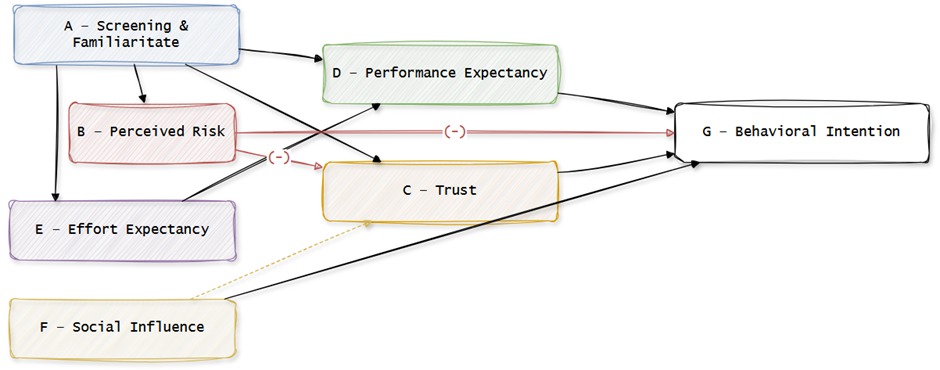
A structured survey assesses:
- perceived usefulness
- ease of use
- technological anxiety
- perceived risks
- trust in AV systems
- social influence
- behavioural intention to use Avs
Survey pathways differ for respondents with and without prior experience using ADAS or autonomous functions.
Progress in the First 4 Months
WP1 – Simulation & Data Collection (Preparatory Work)
- Selection of pilot intersections (Brașov: Civic Centre Ring, Chișinău: Petricani–Balcani Intersection)
- Calibration of edge devices (Jetson Orin + ZED 2)
- Definition of the AI data pipeline
- Collaboration protocol with Brașov City Hall & Traffic Monitoring Centre
WP2 – Public Acceptance
- Full questionnaire structure
- Mapping of stakeholder groups in both cities
- Identification of key psychological constructs
WP3 – Knowledge Transfer
- First research mobility of UTM team to UTBV (4 researchers)
- Technical workshop on PTV VISSIM
- Creation of first demonstration simulation models
WP4 – Communication & Dissemination
- Deliverables completed:
- D4.1 – Communication Plan
- D4.2 – Dissemination & Exploitation Plan
- Media visibility in local press, university communication channels, and social media
- Presentation at AMMA 2025 (Cluj-Napoca)
WP5 – Management
- Consortium Agreement signed
- Project kick-off meeting in Brașov
- Procedures for reporting, scheduling, and data management established
- Visits to the Traffic Monitoring Centre and Research Institute
Key Achievements (Months 1–4)
- 3 technical deliverables submitted
- 1 research mobility completed
- 1 workshop organised
- 1 international conference presentation
- Project website under development (80%)
- Two public announcements & media coverage